Photobucket

Wednesday, May 19, 2010

The Great Gatsby Film Verisions

According to http://www.imdb.com/ there have been four versions of the movie The Great Gatsby, based on F. Scott Fitzgerald's novel, The Great Gatsby, and one in the making. these movies have been made in many different time eras, ranging from the twenties to 2000.

The first film verision of The Great Gatsby was made in 1926. The director was Herbert Brenon.The cast was as follows: Warner Baxter as Jay Gatsby, Lois Wilson as Daisy, Neil Hamilton as Nick, Georgia Hale as Myrtle, Hale Hamilton as Tom, and Carmelita Geragnty as Jordan Baker. This version of The Great Gatsby is a silent film, so you can only imagine how annoying and dramatic Daisy is in this one. This came out a year after F. Scott Fitzgerald's book was released.

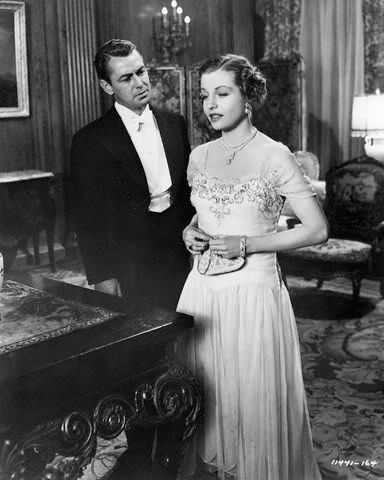

The second version of the film was made in 1949, it was released on March 9. The Director was Elliott Nugent. Jay Gatsby was played by Alan Ladd, Daisy was played by Betty Field, Nick was played by Macdonald Carey, Jordan Baker was played by Ruth Hussey, Tom was played by Barry Sullivah, and Myrtle was played by Shelley Winters. Paramount pictures produced this film it was released on August 5th. Because of the times it was made in black and white.


The third and probablly the most popular film version was released in 1974. It was directed by Jack Clayton and produced by Paramount Pictures as well. Many of the cast members in this film you may recognize today. A lot of them still act today. Robert Redford plays Jay Gatsby, Mia Farrow plays the always annoying Daisy, Bruce Dern plays Tom, Karen Black plays Myrtle, Lois Chiles plays Jordan Baker and Sam Waterson plays Nick. If you would like to find out anymore information on any of these cast member you can go to http://www.imdb.com/title/tt0071577/ and click on their name.


There was a fourth version of the film made in 2000 that was the television adaptation of the book, The Great Gatsby. According to http://www.imdb.com/ there is a fourth version of the film coming out in 2012. There is no released information of the film since it is "in develoment" but you can check back at http://www.imdb.com/title/tt1343092/ regularly to find out more information.

Tuesday, May 18, 2010

East Egg vs. West Egg


East Egg and West egg are "a pair of enormous eggs, identical in contour and seperated by a courtesy bay, just out into the most domesticated body of salt water [...] of Long Island Sound. They are not perfect ovals [...] but their physical resemblance must be a source of perpetual confusion to the gulls that fly overhead. To the wingless a more arresting phenomenon is their dissimiliarity in every particular shape and size." (p.5)

East Egg is the more fashionable group of people who are known as "old money". That means they have always had money. Daisy and Tom lived in East Egg because they were wealthy for most of their lives. Everyone there feels like they have to live up to the social standard and they are shallow people who lack values. An example is Jordan Baker who is completely consumed with herself because she thinks people should be careful of her when she drives. East Eggers are spoiled and dont know any other way to live. Even though this isn't a good way to live, the West Eggers want to be like them.

West Egg is where the group of people known as "new money" live. This means that they worked hard and earned their money in short amount of time. Their wealth is based on what they have. Gatsby is known as "new money" because he got wealthy through bussiness dealings and he has trust and beleif in acheiving his dreams, which gives him morality. West Egg is more moral than East Egg, but still is a place where they like to spend money.

Both East Eggers and West Eggers like to spend money, but the difference is how they got their money and the way it's changed and affected their lives.
The Great Gatsby by F. Scott Fitzgerald


Sunday, May 16, 2010

F. Scott Fitzgerald


F. Scott Fitzgerald was born on September 24, 1894 in St. Paul, Minesota. His father was a furniture manufacterer and his mother was from a wealth family. His family moved to New York for a little bit and then they eventually moved back to St. Paul. He was homeschool for most of his life but "he attended Newman School in Hackensack, New Jersey, from 1911 to 1913" (www.notablebiographies.com/Fi-Gi/Fitzgerald-F-Scott.html) where he worked on the school newspaper.


Fitzgerald attended Princeton University in 1913 where he also worked on a school magazine and school paper. He dropped out in 1915 because he was ill and had bad grades. He returned to Princeton again but only for year and then joined the army. He was stationed in Alabama which is where he met Zelda at the age of 18. Zelda and Fitzgerald met at a dance at the Montgomery Country Club. Even though Zelda loved him she had a hard time committing to him because she was afraid that he wasn't going to make enough money. He finally convinced her to marry him when his book This Side of Paradise was published. In 1921 Zelda and Fitzgerald had their first baby, Frances Scott Fitzgerald (Scottie).


They lived in Europe while he was writing The Great Gatsby. Zelda started to feel lonely leading her to have an affair. They both started drinking heavley, bringing out the worst in all of them. They eventually bought a mansion where they through a lot of parties. Zelda started taking ballet lessons but she her anxiety and lonelyness drove her to insanity. She spent the rest of her life in psychiatric hospitals. F. Scott made sure he supported her and visited her while she as in the hospital. He conitnued writing and Zelda represents a lot of Fitzgerald's characters.


Friday, May 14, 2010

Mafia/Gangsters


In the 1920's gangsters represented silk suits, diamond rings, guns, and drinking and influenced many people to think that gangsters and the criminal lifestlye was the cool thing to be. The public saw the gangster lifestyle as a way to get money, fame, nice clothes, women, cars, and homes. Quality, high fashion suits and expensive accessories were what the gangsters wore.

The 1920's brought us the best dressed and most famous gangster of all time, known as Al Capone. Many other famous gangsters were Lucky Luciano, Bugs Morgan and Dutch Schultz. Every famous gangster's name went along with the color and style of their suit. The tailored suit was the key to their whole ensemble.
When prohibition was passed gangsters changed the way they went about their business. Business was no longer beating someone up for their money and valuables, but instead the mob integrated itself throughout the neighborhoods of Chicago, Detroit, and New York City. Here they would bootleg and make millions of dollars from it by supplying beer and liquor to speakeasies.
Gangsters were feared and respected within their neighborhoods, which allowed them to earn a good living from the public by convincing them to increase the price of groceries and services. Then they would take the profits from the providers of these goods.

In the 1920's, gangsters became the American icon of an ordinary man. Gangsters lived their life by their own ethics by bootlegging, getting into illegal marketing and prostitution. The modern gangster is still the ultimate consumer of everything luxurious and expensive. Jewelry, clothes, cars, and houses are and were the rewards of their lifestyle.
source: www.1920s-fashion-and-music.com/1920s-gangsters


Wednesday, May 12, 2010

The 1920's

The 1920’s was a time of change. Women were changing their style, and earning more rights. Movies were becoming a big business, and cars were becoming more common and affordable.
Women were straying away from long dresses and things that covered them, and turned to things more revealing and comfortable. They started to wear short dresses that showed a lot of skin. These dresses were considered racy and immoral to people of the older generation. Women were also cutting off all of their hair, and also drinking and smoking in public for the first time. They seemed to be more comfortable and carefree. Some see this as a bad thing, but I see it as a good thing. The 1920’s allowed women to express themselves and showed them that they didn’t have to fit the cookie cutter image of what a woman should be or look like.


Also, movies were becoming a big hit in the twenties. The first “sound picture” was created during this decade. This was a big deal because before movies were basically like a slideshow of pictures that told a story. The first Oscar Award was given in 1929, it wasn’t a big event like it is today it was very small and hosted in a hotel. I find this very interesting since we make such a big deal about the awards ceremony now and how big of an event it is. Also in the entertainment business, Broadway hit an all time peak in the twenties. Entertainment grew immensely during this decade and a lot of it influenced our entertainment today.

Lastly, automobiles were more common in the 1920’s then they ever were before. This was because Henry Ford created the Model T. The Ford manufactures made it less expensive to make cars, which made cars less expensive. Therefore allowing more middle class citizens to afford cars.

Tuesday, May 11, 2010

Flappers of the 1920's


Flappers of the 1920's started a new era for women. During this time, women left their conservative looks and wore lots of makeup, had crazy hairstyles, and wore clothes out of the ordinary that sometimes were considered inappropriate. This was a rebellion by women that changed women's fashion and their place in society.

During the Roaring Twenties, after WWI, women had the right to vote and felt more independent, which could have caused the flappers to come about.

Flappers were described as risk-takers and wanted to do things out of the ordinary. They listened to the new jazz music and danced very provocatively at jazz clubs. They dated whoever they wanted and viewed sex alot more casually than before. Women in this era even drove cars, rode bicycles and even smoked

Flappers were known for their style. When gowns, corsets and long hair were the ordinary thing to have, flappers brought in a completely different look. They wore short skirts, which showed their legs, cut their hair short and wore alot of makeup. They also wore cloche hats, layered necklaces and horn-rimmed glasses. High heel also became popular and short dresses too. This was so women could show off their legs when they danced. The Charleston dance became extremely popular with the flappers.


Monday, May 10, 2010

1920's Prohibtion


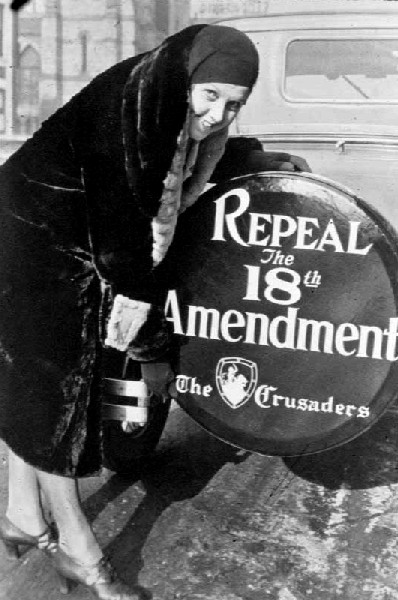
Prohibition was the ban of making, selling, or drinking alcohol. Prohibition seemed to do more harm than good. It caused many people to revolt and crime rates to increase. The government soon found that it was almost impossible to enforce prohibition.

Gangsters, bootleggers, moon shiners, and rumrunners all illegally made and sold alcohol. Prohibition made a great business for these groups. They were able to sell the alcohol that they either smuggled or made (illegally). In fact gangsters such as, Al Capone, became multi-millionaires. With the money they made from alcohol they were able to pay off any officials that caught them. Gangs also increased the crime rates during prohibition because they thought of bootleggers, moon shiners, and rumrunners as competition. Gangs wanted to get rid of their competition so they turned to violence.
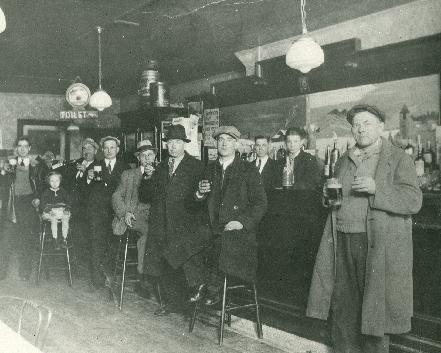
Also, a lot of gangs opened up speakeasies to sell their alcohol. Speakeasies were underground bars where people, men and women, could go and drink without getting caught. Women were drinking for the first time in public in speakeasies. They were very popular during prohibition because people wanted to party and that meant drinking and these underground bars were the only place they could go and drink socially.